


Story details
In a private-sector diagnostic for Djibouti released on 13 September, the World Bank Group says reforms to regulation and skills could unlock at least $600 million in private investment across solar energy, data centres and tourism over five years, with around 12,000 jobs. The figures are opportunities conditioned on the policy changes described in the report, not financing attached to ready projects. The release does not present them as signed investment commitments or verified job creation.
The report starts from Djibouti’s existing economic and infrastructure position. The country lies beside major shipping lanes and serves as the principal maritime gateway for Ethiopia. The World Bank says the economy grew by an average of 5.3 percent a year between 2016 and 2024 and has attracted substantial foreign investment into port infrastructure. High electricity costs, limited access to finance, skills gaps and competition restrictions in some sectors nevertheless constrain private-sector growth.
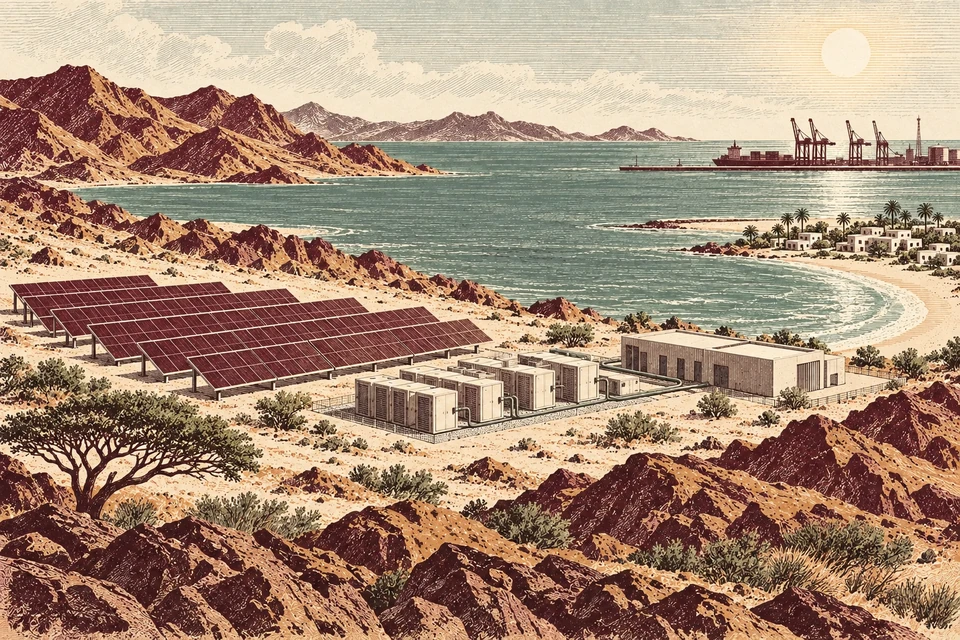
For solar power, the report says private investors have deployed approximately 10 megawatts of off-grid capacity since 2022. The stated commercial electricity tariff is 25 US cents per kilowatt-hour, compared with an Africa regional average of 14 cents. The difference highlights why power is a major business cost. The Bank identifies higher self-generation limits, clearer power-purchase arrangements, stronger sector regulation and skills development as steps that could help attract investment.
Under those conditions, off-grid solar could attract up to $390 million over five years and create more than 8,500 jobs, according to the diagnostic. The qualifications matter: the report does not say that this investment has already arrived or that 8,500 is a final, verified job count. Nor does the 10-megawatt figure refer to all renewable generation in the country; it describes off-grid installations made since 2022.
Eight operational submarine cables connect Asia, Europe and Africa through Djibouti, and existing data-centre capacity is nearing full use. The report identifies potential investment of $160 million to $240 million and 700 to 1,300 additional jobs if regulatory, power-supply and market-access issues are addressed. Existing cable links are an infrastructure advantage, but the release does not say that new data centres have been financed or that their added capacity is assured.
For tourism, the diagnostic cites lake landscapes, natural formations and marine life as potential attractions. It says reforms to licensing, data and skills could turn investor interest into committed capital. The report therefore identifies a potential $66 million to $180 million in investment and 2,600 jobs. These are not counts of completed hotels, newly operating routes or employees already hired; they describe opportunities under the conditions assessed.
The World Bank’s headline estimate is at least $600 million in potential private investment and around 12,000 jobs across the sectors. Because sector figures include upper limits and ranges, it would be misleading to replace the institution’s aggregate with a more exact total calculated from those figures. The report identifies barriers that investors may face; it does not announce project decisions by named investors or say that public agencies have budgeted these sums.
Assessing progress will require tracking actual off-grid solar connections, power tariffs, data-centre capacity, licensing times, capital commitments and sustained jobs. Those indicators can show whether the identified opportunities become projects. The diagnostic names three sectors and outlines policy changes; investment outcomes can only be verified through later implementation and company-level evidence.


