Ravenna CCS Phase 2 selected for EU Innovation Fund support
The Italian CO₂ transport and storage project developed by Eni and Snam was selected by the European Commission under the 2025 Innovation Fund’s large-scale net-zero technology call.
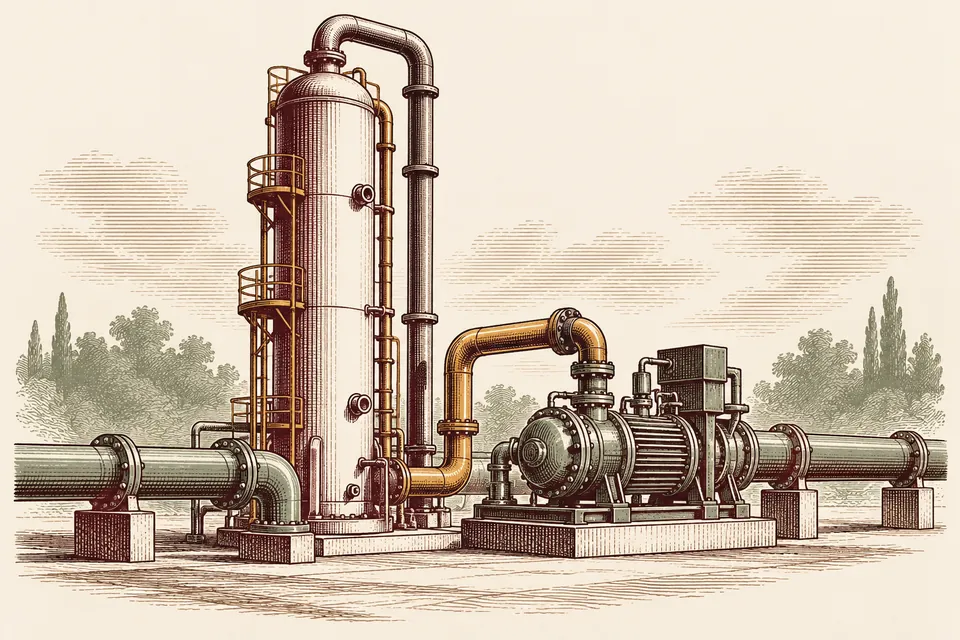
AI-generated symbolic illustration. No actual facility, completed project or measured emissions reduction is depicted. · Energy / Haber Paper
Story details
Eni said on 20 October that the European Commission selected the second phase of Ravenna CCS for support under the large-scale category of the 2025 Innovation Fund – Net-Zero Technologies. Developed by Eni and Snam, the project is intended to build infrastructure to collect carbon dioxide from industrial emitters in Italy and Europe by pipeline, ship, rail and road, then store it permanently in offshore reservoirs in the Adriatic Sea.
The development plan targets storage capacity of 4 million tonnes of CO₂ a year by 2030, with potential to expand to 16 million tonnes annually in later phases. Eni’s announcement confirms selection for support but does not state the award amount or a final investment decision. These are planned capacities; the project is not complete and is not yet storing emissions at those levels.
SOURCE-LINKED CONNECTIONS
Story context
These connections rely on identities, events and supporting passages explicitly recorded in the stories.
The Italian CO₂ transport and storage project developed by Eni and Snam was selected by the European Commission under the 2025 Innovation Fund’s large-scale net-zero technology call.
The Italian CO₂ transport and storage project developed by Eni and Snam was selected by the European Commission under the 2025 Innovation Fund’s large-scale net-zero technology call.
The company said it repurchased 3.90 million shares at a weighted average price of €25.6309.
Source: Eni
AI-generated symbolic illustration. Imagined fuel-import record reconciliation; no actual ledger, figures, storage site or proven misconduct is depicted.
Google Analytics can measure visits and site activity using cookies if you allow it. You can change your choice later.
Measurement and privacy details
Google Analytics measurement starts only if you allow it. After consent, automatic measurement may cover scrolls, outbound link clicks, downloads, video engagement, site searches and basic form interactions; search terms may be detected from URL parameters. This site’s own code does not send form field values; email redaction in automatic measurement is best-effort, not guaranteed. Our manual page-view event uses a cleaned URL. You can change your choice later. Visits that begin with consent may also send numeric LCP, INP and CLS performance measurements after Analytics loads. A first or later grant starts this on the next page load; withdrawing consent stops these performance reports for this page. The preference cookie lasts six months; advertising measurement and personalization stay off.
Your browser is sending a Global Privacy Control signal. Analytics is off by default; you may explicitly change this choice here.